
Loading...
Serving Compton, CA and surrounding areas. (424) 447-1306
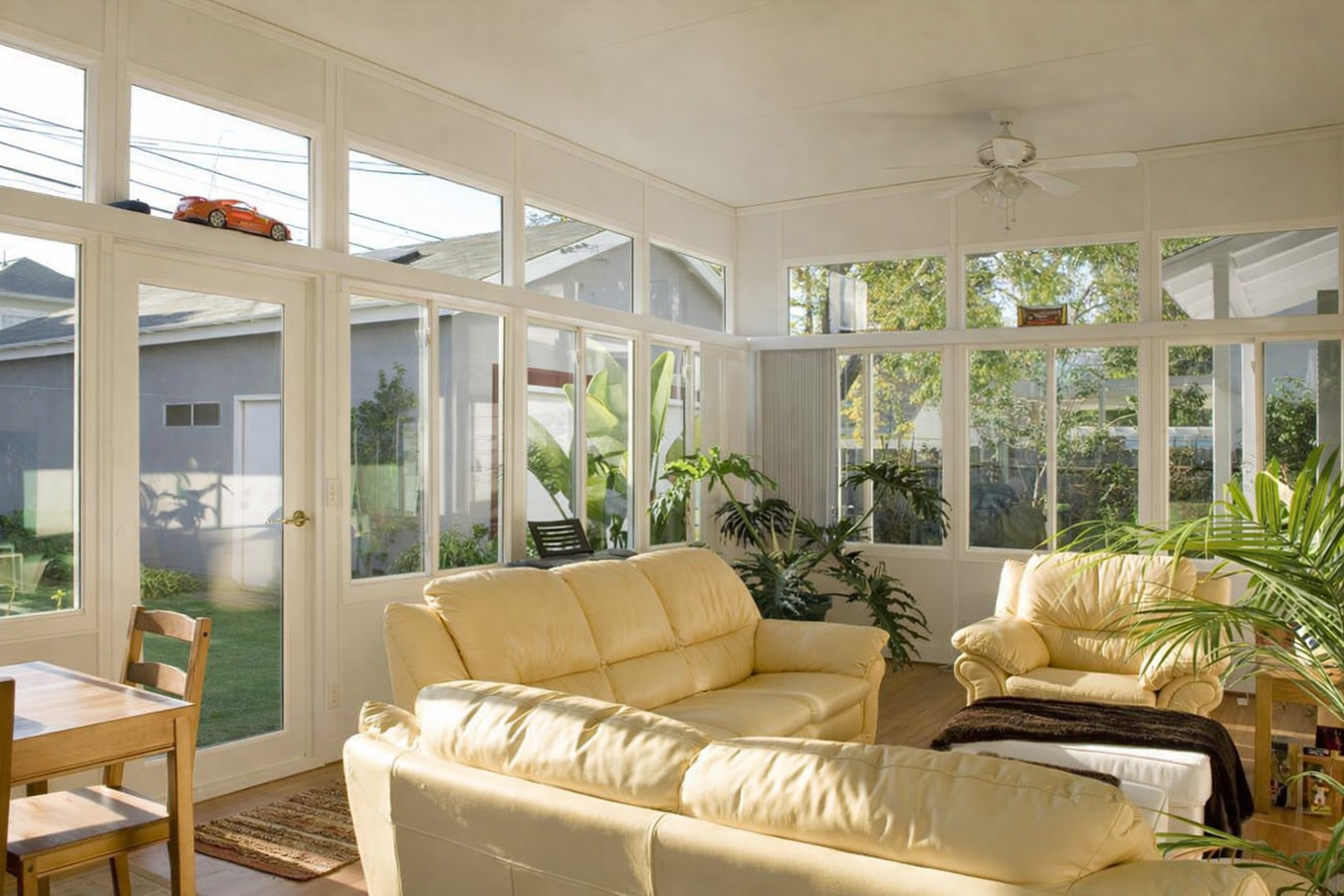
Vinyl frames hold up to Southern California's UV and heat without the maintenance demands of wood. We build permitted vinyl sunrooms in Compton that are comfortable in summer and legal when it is time to sell.
Vinyl sunrooms in Compton are fully enclosed room additions built with a vinyl frame - the same durable, low-maintenance material used in quality replacement windows - and glass panels that let in natural light while keeping out wind, bugs, and rain. Most installations take three to seven days of actual on-site work, with a total project timeline of four to eight weeks including the city permit process.
Vinyl holds up well in Southern California's climate. It does not rust, rot, or need painting the way wood or untreated aluminum can. That makes it a practical choice in Compton, where UV exposure is intense year-round and the occasional marine air can wear down other materials faster than homeowners expect. For homeowners who want to understand the full range of design options before deciding on a frame material, our sunroom additions page covers the broader landscape. If you are already close to committing and want to compare vinyl against a fully custom build, our three season sunrooms page walks through the seasonal comfort trade-offs in more detail.
Every vinyl sunroom we install in Compton is permitted through the City's Building and Safety Division. A permit is not paperwork for its own sake - it triggers the inspection that confirms your room is safely anchored to your home and built to code. An unpermitted sunroom can create problems at refinancing, create liability in an earthquake, and complicate a sale. We handle the entire permit process so you do not have to.
If you walk past your backyard without stopping because it is too hot and too exposed to enjoy, a vinyl sunroom with heat-reflective glass solves that directly. Compton's long sunny summers mean a shaded, enclosed space can extend your usable outdoor time by months. When you find yourself wishing you could sit outside without squinting or sweating, that is a clear sign a sunroom would change how you use your home.
If your existing patio slab is level, uncracked, and at least ten feet in one direction, you may already have the foundation a vinyl sunroom needs. Many Compton homes from the 1950s and 1960s were built with generous backyard slabs that are sitting unused. A contractor can assess your slab during a free estimate visit - and if it qualifies, your project cost drops meaningfully compared to pouring new.
A traditional room addition involves opening walls, rerouting utilities, and months of construction disruption. A vinyl sunroom gives you a new, usable room in a fraction of the time and at a fraction of the cost. If you have been thinking about a home office, a playroom, or a sitting room but the idea of a major renovation feels overwhelming, a vinyl sunroom is worth exploring first.
Many Compton homes have aluminum covers or lattice structures that provide shade but do not stop heat, wind, or noise. If your patio is still uncomfortable even when shaded, or if dust and wind make it unpleasant, a fully enclosed vinyl sunroom with proper glass would solve all of those problems at once. The difference between a patio cover and a sunroom is the difference between partial shade and a real room.
The most important decision in a vinyl sunroom project is not the frame - it is the glass. In Compton's climate, we specify heat-reflective glass as a standard inclusion rather than an upgrade, because the alternative is a room that is uncomfortable from June through September. Beyond glass, the choice between a three-season and four-season configuration determines how the room is insulated and whether it connects to your home's HVAC system. A three-season room is comfortable for most of the year in Compton's mild climate without mechanical cooling. A four-season room is fully insulated and climate-controlled, making it usable on the hottest summer days. Both options are available in our vinyl sunroom builds, and we walk you through the trade-offs in writing before you decide. Our sunroom additions page covers the full scope of addition types. Our three season sunrooms page explains the seasonal comfort differences in detail.
Glass selection for any Southern California sunroom is worth researching. The Energy Star program rates window and glass products for heat performance, and the National Association of Home Builders publishes guidance on evaluating room addition contractors. Both are worth a look when you are comparing bids.
For homeowners who want a comfortable enclosed space for most of the year without the added cost of full climate control - well matched to Compton's mild winters and moderate spring and fall temperatures.
For homeowners who want to use the room comfortably through Compton's hottest months - fully insulated with a connection to your home's heating and cooling system.
For homeowners with a sound concrete patio slab already in place - we assess and confirm suitability during the estimate visit, which can reduce project cost and timeline meaningfully.
For homeowners whose existing slab is cracked, settled, or not suited to a permanent structure - we handle the foundation work as part of the full project before any frame goes up.
Compton's climate puts real demands on outdoor structures. The summer sun is intense, UV exposure is constant, and the occasional Santa Ana wind event can stress anything that is not anchored properly. Vinyl handles these conditions well - it does not fade or warp the way painted wood can, and it does not oxidize the way some lower-grade aluminum products do over time. For homeowners in a climate with near-year-round sun and significant heat load, the low-maintenance profile of vinyl is a practical advantage, not just a marketing claim. Homeowners in nearby Hawthorne and Torrance face the same UV and heat load conditions - and we serve both communities with the same approach.
A significant share of Compton's housing was built between the 1940s and 1970s. Many of those homes have concrete patio slabs that are still usable as a sunroom foundation - but some have settled, cracked, or are simply not thick enough to anchor a permanent structure safely. Before any vinyl panel goes up, we assess your slab honestly and tell you whether it is suitable or needs work. California also requires that all permanent structures attached to your home be designed to meet seismic standards, which affects how the frame is anchored. This is one of the main things the permit inspection confirms - and one of the main reasons permits matter in this region.
When you reach out, we ask about your patio size, whether you have an existing slab, and what you want to use the room for. We reply within one business day and schedule a free in-home estimate. This visit is your chance to ask questions and get a feel for whether we are a good fit before committing to anything.
We measure your space, assess your existing slab, and walk you through your options - room size, glass type, door placement, and whether you want climate control. You leave with a written quote that breaks down what is included. Do not sign at this visit - take the quote home and compare it with others.
Once you sign a contract, we file for the building permit with the City of Compton's Building and Safety Division. If your neighborhood has an HOA, we help you navigate that approval before the permit is filed. We also handle any slab repair or replacement that is needed before the frame goes up.
The vinyl sunroom frame and glass panels are typically assembled in three to seven days. After installation, the city inspector confirms the structure meets Compton's building requirements. We then walk through the finished room with you - every door, window, and seal checked before you sign off and make your final payment.
We reply within one business day and come to your home to assess the space in person. No pressure, no obligation.
(424) 447-1306Many Compton homes have older concrete slabs that look usable but are not suited to a permanent structure. We assess your slab during the estimate visit and tell you clearly whether it qualifies or needs work - before you sign anything. That honesty upfront prevents the surprise costs that erode trust in the middle of a project.
In Compton's climate, heat-reflective glass is not optional - it is the difference between a room you use in July and one you avoid. We specify it as a standard part of every vinyl sunroom build rather than offering it as a paid upgrade. The California Energy Commission's Title 24 standards support this approach as a baseline for energy performance in new construction.
We pull the permit with the City of Compton, track the plan review, schedule the city inspection, and hand you the documentation when the project is complete. You do not have to navigate city hall yourself. The California Contractors State License Board - verifiable at cslb.ca.gov - confirms our license is active and in good standing.
Compton is in one of the most seismically active regions in the country. Every vinyl sunroom we install is anchored and framed to meet California's earthquake safety requirements - not as an add-on, but as a standard part of how the structure is designed and permitted. This is what the city inspection verifies, and it is what protects you in a significant seismic event.
A vinyl sunroom is a real investment in your home. The contractors who build them well are the ones who ask the hard questions first - about your slab, your HOA, your sun exposure, and your permit - before anyone picks up a panel. That is how we approach every project in Compton.
Explore the full range of sunroom addition types available in Compton to understand how vinyl fits into the broader set of options.
Learn MoreA closer look at the seasonal comfort trade-offs between three-season and four-season configurations - useful reading before you decide on insulation and climate control.
Learn MorePermit slots and installation windows fill up - starting the conversation now means your new room is ready before summer peaks rather than after it.